
Summary
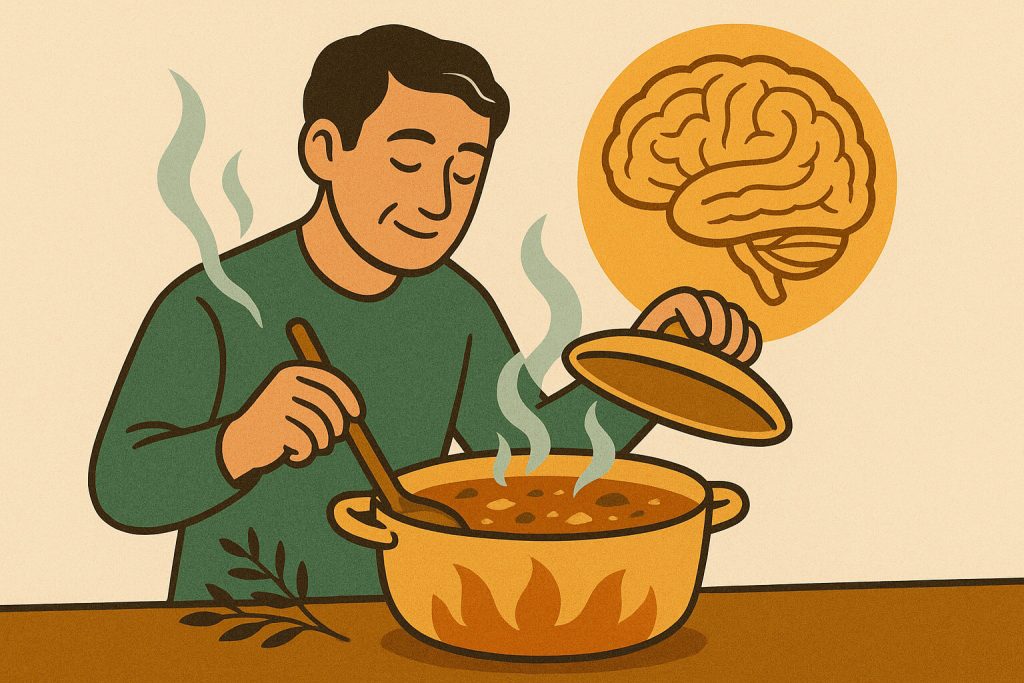
What we eat shapes how we think. Broth-based nutrition supports not only physical health but also brain performance. Amino acids, collagen, minerals, and fatty acids found in soups directly influence neurotransmitters, memory, and emotional balance.
Main Text
Modern neuroscience reveals that gut and brain communicate through the gut-brain axis. Soups rich in glutamine, glycine, and magnesium help strengthen this link — nourishing intestinal lining while calming the nervous system.
Collagen and gelatin from long-simmered bone broths contain glycine, which promotes deeper sleep and improved cognitive clarity. These amino acids act as inhibitory neurotransmitters — natural “calmers” for the mind.
Minerals like zinc and iron, often extracted into soups through slow cooking, are critical for memory and focus. Iron facilitates oxygen delivery to the brain; zinc aids neurotransmission and mood regulation.
Essential fatty acids, especially from ingredients like fish heads or chicken skin, support the formation of myelin — the protective sheath around neurons — improving signal transmission speed and learning capacity.
Traditional Chinese medicine also emphasizes the relationship between brain and kidney essence (腎精). Tonifying soups like black bean with walnut or ginseng chicken are believed to replenish essence and sharpen the mind.
Research shows that people who regularly consume nutrient-dense broths exhibit better cognitive resilience with age — less fatigue, higher alertness, and lower risk of neurodegenerative diseases.
Conclusion
Broth nourishes the brain through both chemistry and ritual. The simple act of sipping soup can reset the nervous system, improve focus, and nurture clarity — proof that food and thought are inseparable.
References (APA 7th)
- Gómez-Pinilla, F. (2008). “Brain foods: The effects of nutrients on brain function.” Nature Reviews Neuroscience, 9(7), 568–578.
- Smith, A. P. (2020). “Dietary influences on mood and cognition.” Nutrition Reviews, 78(1), 1–14.
- Zhang, L., & Chen, R. (2021). “Gut-brain axis and traditional food therapy.” Frontiers in Nutrition, 8, 734912.
 English
  香港中文
香港中文  简体中文
简体中文