
Summary
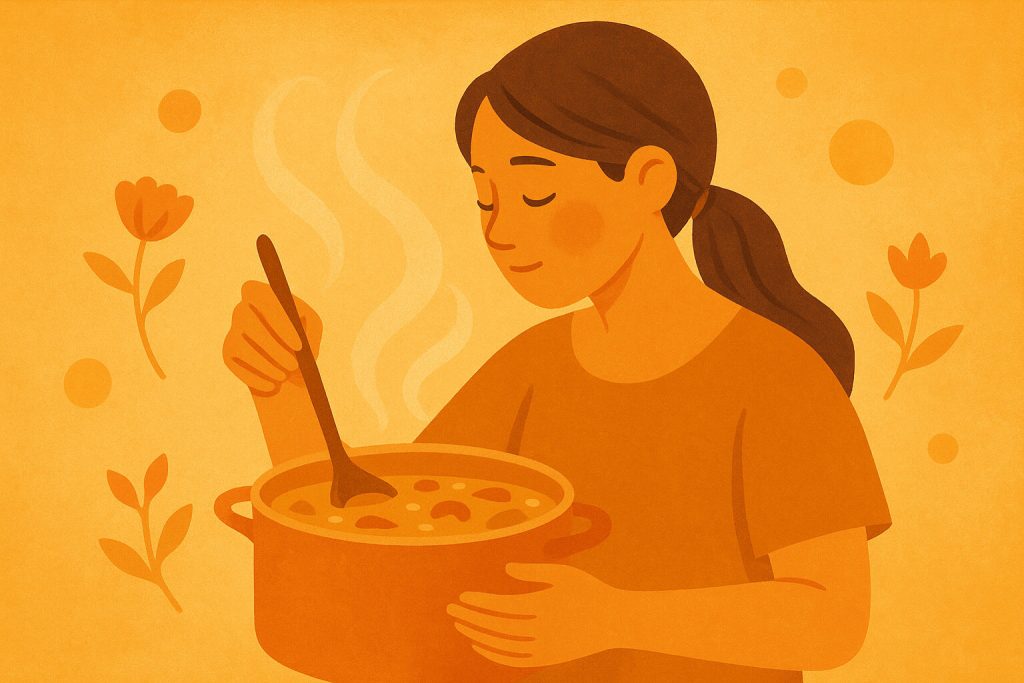
From adolescence to menopause, a woman’s body undergoes rhythmic hormonal changes. Soup, as a gentle yet powerful nourishment, provides essential nutrients, warmth, and balance to support every stage — from menstruation to motherhood.
Main Text
Women’s health is deeply intertwined with qi (energy) and xue (blood). In Traditional Chinese Medicine (TCM), the female body thrives on the smooth flow of these two elements. Soup, being easy to digest and warm in nature, replenishes both, harmonizing internal rhythms.
1. During Menstruation — Replenish and Soothe
After menstruation, women often experience blood loss and fatigue. Soups made with red dates, goji berries, and black chicken restore iron, folate, and vitality while calming uterine contractions.
2. During Ovulation — Nourish and Stabilize
In the ovulatory phase, hormone levels peak. A light soup with tofu, yam, and wolfberry supports estrogen balance and hydration. Soy phytoestrogens act as natural hormone modulators.
3. During Pregnancy — Gentle Nourishment
Pregnancy increases nutritional demands. Soups with fish, lotus root, and lean pork provide iron, DHA, and protein for fetal development. Avoid overly hot herbs and strong tonics.
4. Postpartum — Restore and Rebuild
Postnatal recovery focuses on replenishing blood and qi. Ginger, sesame oil, and black vinegar chicken soups are used in “confinement meals” to warm the uterus and boost lactation.
5. Menopause — Balance and Calm
During menopause, estrogen drops, leading to hot flashes and insomnia. Soups with black sesame, soy milk, and seaweed provide calcium, lignans, and antioxidants to ease symptoms.
6. Emotional Balance — The Heart–Uterus Axis
Modern research supports TCM’s view that emotional stress disrupts hormonal regulation. Soups rich in magnesium and tryptophan (e.g., mushroom or pumpkin soups) can calm the nervous system and regulate mood.
True nourishment for women is not about excess, but harmony — of hormones, blood, and heart. Soup embodies this balance: warm, replenishing, and deeply human.
Conclusion
From the menstrual cycle to menopause, soup remains a faithful companion to women’s health. Its warmth speaks to both physiology and emotion — a daily ritual of self-care and restoration.
References (APA 7th)
- Chen, M., & Zhang, Y. (2021). “Dietary interventions for menstrual health.” Nutrition & Women’s Health Journal, 15(4), 241–255.
- Ko, E., & Lin, S. (2022). “Phytoestrogens and hormonal modulation through traditional soups.” Frontiers in Endocrinology, 13, 987501.
- Tan, J., & Liu, X. (2023). “Postpartum nutrition and lactation-enhancing soups.” Journal of Maternal Health Nutrition, 19(2), 110–126.
 English
  香港中文
香港中文  简体中文
简体中文