
Summary
In an age of speed and distraction, cooking soup invites slowness, mindfulness, and presence. The act of washing, chopping, simmering, and tasting becomes not just culinary work, but a meditation — a way to reconnect with time, with self, and with gratitude.
Main Text
Across cultures, soup has always been associated with care. In Chinese homes, mothers prepare broth for returning children; in Europe, grandmothers ladle stew for family gatherings. The process is intimate — it requires patience, repetition, and love.
In psychological terms, this repetitive and sensory activity engages the parasympathetic nervous system — the body’s “rest and digest” mode — reducing anxiety and promoting calm. Researchers have shown that cooking, especially slow cooking, increases mindfulness and serotonin levels.
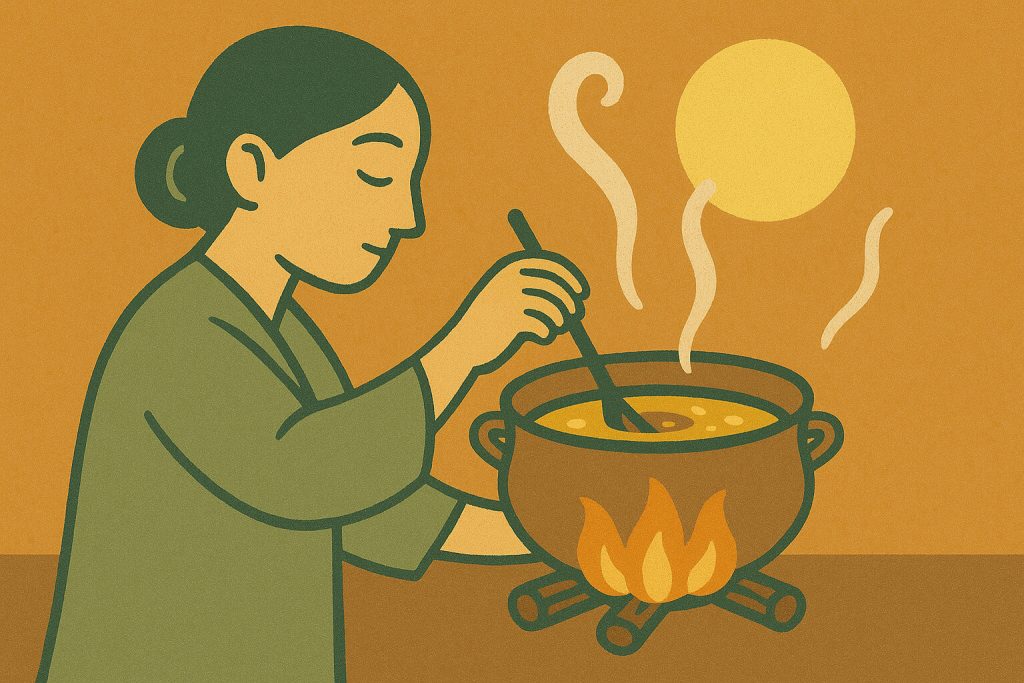
The rhythm of cooking mirrors the rhythm of breathing. The sound of boiling water, the aroma of simmering herbs, the sight of steam rising — all draw the mind into the present moment. Soup becomes a form of moving meditation, where time slows, and awareness expands.
In Taoist philosophy, cooking aligns with the principle of “無為而治” — achieving harmony through natural flow. When we cook without hurry, without force, ingredients reveal their true nature. The act itself becomes spiritual nourishment.
For modern people, the kitchen can serve as a sacred retreat — a space where we heal not only hunger but emotional fatigue. As long as there is a pot on the stove, there is rhythm, warmth, and life.
SOUPGOD’s philosophy of “A Bowl with Soul” extends beyond nutrition — it is about restoring mindfulness to everyday living. Every bowl is a quiet ceremony, inviting peace into the ordinary.
Conclusion
Cooking soup is not about perfection — it’s about presence. The more mindful the process, the richer the flavor, both in taste and in life.
References (APA 7th)
- Siegel, D. J. (2018). Aware: The Science and Practice of Presence.
- TarcherPerigee.Kabat-Zinn, J. (2013). Full Catastrophe Living: Using the Wisdom of Your Body and Mind to Face Stress, Pain, and Illness.
- Bantam Books.Lin, H. (2022). “Cooking and mindfulness: The psychology of slow food preparation.” Journal of Culinary Science & Technology, 20(5), 377–392.
 English
  香港中文
香港中文  简体中文
简体中文