
Summary
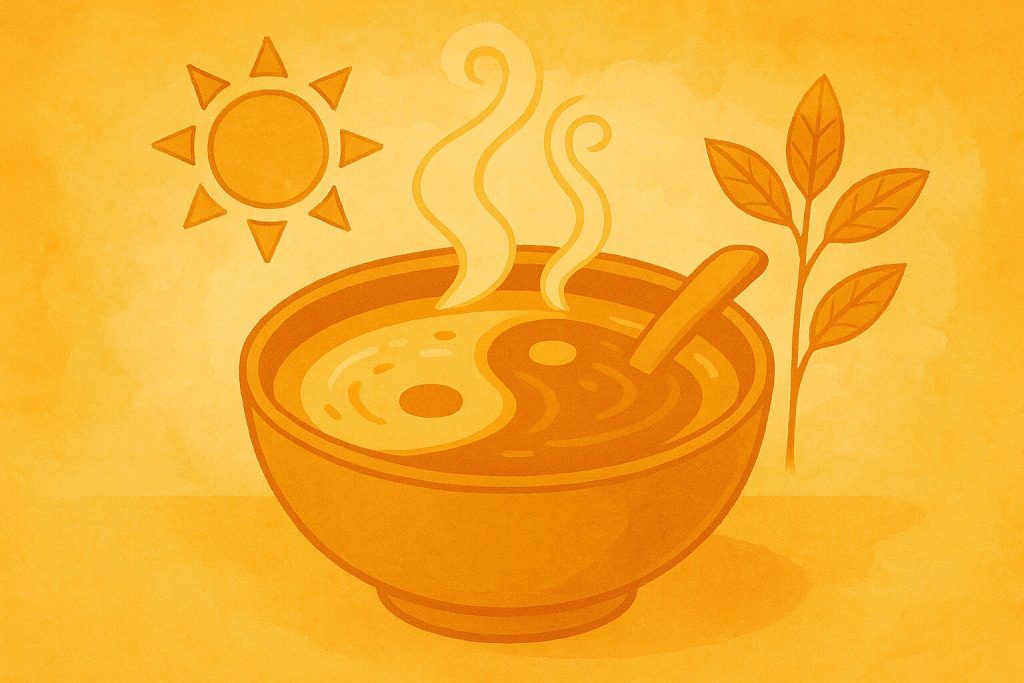
Soup is more than nourishment — it is philosophy in a bowl. From the slow simmering of ingredients to the harmony of flavors, it teaches patience, balance, and mindfulness — the same principles essential for a meaningful life.
Main Text
In every culture, the making of soup mirrors the making of life. It begins with intention, transforms through time and heat, and ends in nourishment and connection. To make good soup is to understand time; to share it is to understand love.
1. The Lesson of Balance
Every soup requires harmony — between yin and yang, solid and liquid, flavor and restraint. Too much salt spoils; too little makes it bland. Life, too, is seasoned by moderation.
2. The Virtue of Patience
Soup cannot be rushed. It must simmer, evolve, and clarify. The heat of time draws out essence — just as hardship reveals character and wisdom in life.
3. The Importance of Simplicity
Some of the best soups are made from few ingredients — water, salt, bones, vegetables — yet they comfort deeply. True richness lies not in abundance, but in sincerity.
4. The Flow of Time
Just as soup changes with each minute of simmering, we too evolve with time. What was once raw becomes tender; what was once bitter turns sweet. Time, if embraced, transforms everything.
5. The Circle of Sharing
Soup gathers people. A family table, a street stall, a community kitchen — all exist because of one simple act: sharing warmth. Generosity is the true flavor of life.
6. The Spiritual Dimension
To sip soup mindfully is to meditate — to feel heat, aroma, and gratitude in one breath. It is presence distilled into taste.
In the end, soup philosophy is life philosophy: to balance, to wait, to give, and to be grateful. The bowl reflects not just nourishment, but the mirror of our soul.
Conclusion
Soup is the metaphor of existence — humble yet profound, silent yet expressive. To understand soup is to understand the art of living: gentle, adaptable, and full of quiet strength.
References (APA 7th)
- Chang, H. (2021). The Aesthetics of Food and the Mindful Kitchen. Taipei: Wisdom House Press.
- Li, S., & Wang, Z. (2022). “Harmony and nourishment in Chinese culinary philosophy.” Journal of Cultural Gastronomy, 9(3), 201–220.
- McBride, E. (2023). “The meditative art of cooking and eating.” Psychology of Wellbeing, 14(2), 77–95.
 English
  香港中文
香港中文  简体中文
简体中文