
Summary
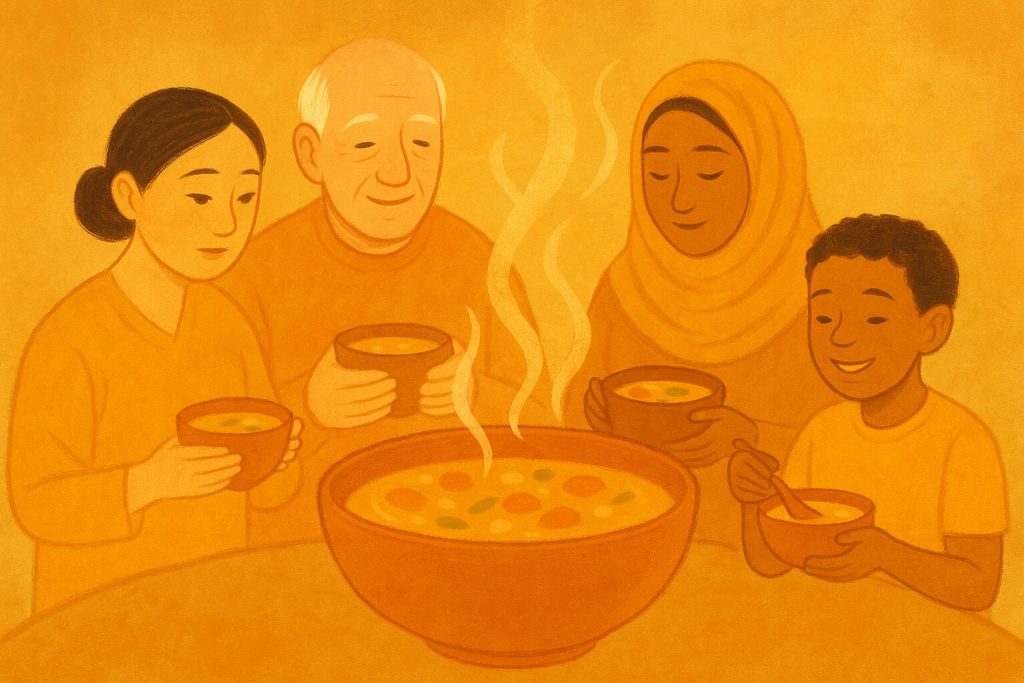
From Chinese herbal broths to French consommé, from Thai tom yum to Mexican pozole — every culture has its own way of boiling comfort into liquid form. Soup is humanity’s shared expression of care, healing, and connection.
Main Text
Across continents, soup has emerged as one of the most universal foods — bridging class, geography, and belief. While ingredients and techniques differ, the essence remains the same: nourishment and connection.
1. East Asia — Healing Through Harmony
In China, Japan, and Korea, soups are seen as both food and medicine. Chinese herbal broths balance qi and yin-yang; Japanese miso soup fosters umami and gut health; Korean ginseng chicken soup strengthens stamina and spirit.
2. Southeast Asia — Spice and Balance
Soups such as Thai tom yum and Vietnamese pho combine herbs, citrus, and broth to create complex layers of flavor. They stimulate appetite, cleanse the palate, and reflect tropical abundance.
3. Europe — Refinement and Comfort
Europe developed soup into both peasant fare and haute cuisine. French onion soup celebrates caramelization and patience; Italian minestrone honors seasonal vegetables; Eastern Europe’s borscht reflects resilience and color.
4. The Americas — Heritage and Fusion
In Latin America, soups like Mexican pozole and Peruvian chupe de camarones mix indigenous grains and colonial ingredients. In North America, chicken noodle soup became a symbol of home and recovery.
5. Africa and the Middle East — Life Through Spice
Moroccan harira, Egyptian lentil soup, and Nigerian pepper soup are rich in legumes, turmeric, and heat — symbolizing strength, community, and resilience in harsh climates.
Despite their diversity, all these soups share one principle — they gather people. Whether in clay pots or copper cauldrons, they tell stories of survival, family, and love.
Conclusion
Soup is the world’s most universal comfort. Across languages and borders, it speaks of care, community, and hope — reminding us that, wherever we are, warmth is a shared human heritage.
References (APA 7th)
- Anderson, E. (2021). Food and Culture: The Global History of Soup. New York: Oxford University Press.
- Li, X., & Dupont, M. (2022). “Cross-cultural perspectives on soup as comfort food.” International Journal of Gastronomy Studies, 6(2), 145–162.
- Ramirez, L., & Kim, H. (2023). “The social meaning of soup in family rituals.” Anthropology of Food, 19(1), 88–103.
 English
  香港中文
香港中文  简体中文
简体中文