
Summary
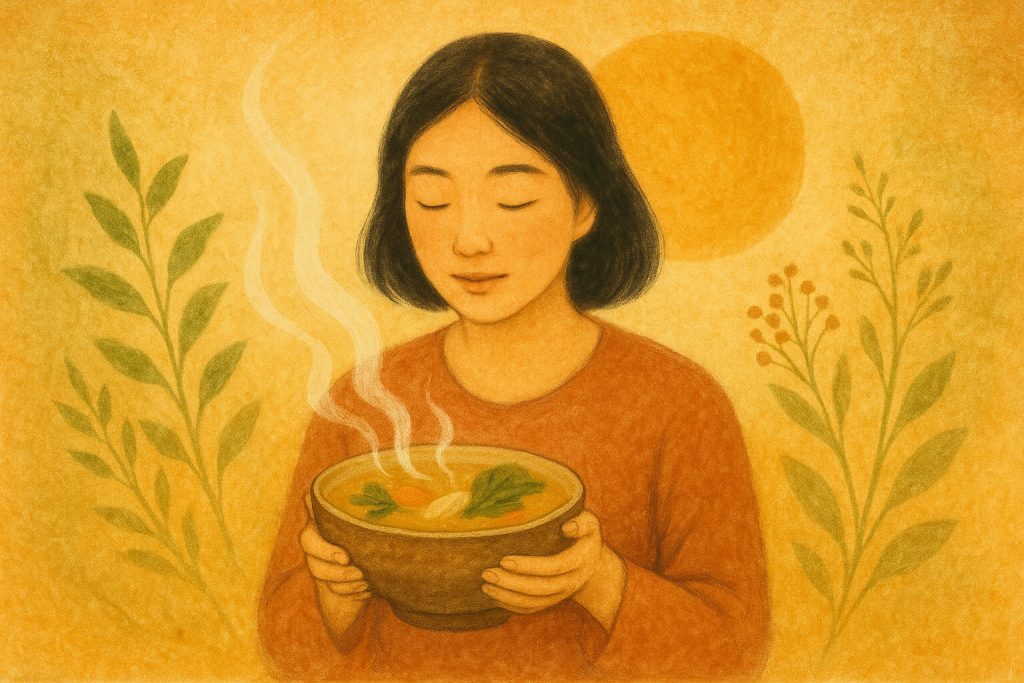
Long before the term preventive medicine existed, soup served as the daily elixir of health. Traditional Chinese Medicine (TCM) viewed diet as the first defense against disease — and soup, being easy to digest and rich in nutrients, remains a powerful foundation for immune balance and longevity.
Main Text
Preventive medicine emphasizes early intervention — strengthening the body before illness occurs. In this context, soup functions as both nourishment and micro-therapy, restoring balance through warmth, hydration, and gentle tonification.
1. The Immune Connection
Soups made from bones, legumes, and herbs deliver amino acids, minerals, and antioxidants that regulate immunity. Collagen and glycine strengthen gut integrity — the foundation of immune defense.
2. The Gut–Brain Axis
Modern research reveals that gut health affects mood, cognition, and inflammation. Soups rich in prebiotic fibers, fermented ingredients, or miso support beneficial bacteria and reduce systemic inflammation.
3. Anti-Inflammatory Nutrition
Ingredients such as turmeric, ginger, garlic, and shiitake mushroom contain bioactive compounds that inhibit inflammatory pathways. Regular consumption helps prevent cardiovascular and metabolic diseases.
4. Balancing Yin and Yang in Modern Terms
Warm soups replenish yang and circulation; cooling broths reduce yin deficiency heat. Such dietary modulation aligns with modern homeostasis — maintaining internal stability amidst environmental stress.
5. Preventing Modern Illnesses
Stress, poor diet, and inflammation drive chronic diseases. Reintroducing daily soup rituals — especially morning tonics or evening detox soups — can stabilize metabolism, sleep, and immunity.
Preventive health is not about waiting for illness, but cultivating vitality every day. Soup exemplifies this philosophy — simple, timeless, and holistic.
Conclusion
Soup is the quiet guardian of preventive medicine — warming the body, balancing the gut, and calming the mind. A bowl a day is not superstition, but science translated through culture.
References (APA 7th)
- Hsu, L., & Lin, Y. (2022). “Gut–immune interactions and dietary modulation through soup-based nutrition.” Frontiers in Immunology, 13, 987561.
- Kim, S., & Zhao, X. (2021). “Soup-based interventions for inflammation and metabolic health.” Clinical Nutrition Review, 40(5), 245–258.
- Wu, J., & Tan, C. (2023). “Food therapy and preventive health: A modern interpretation of TCM principles.” Journal of Integrative Medicine, 21(2), 134–142.
 English
  香港中文
香港中文  简体中文
简体中文