
Summary
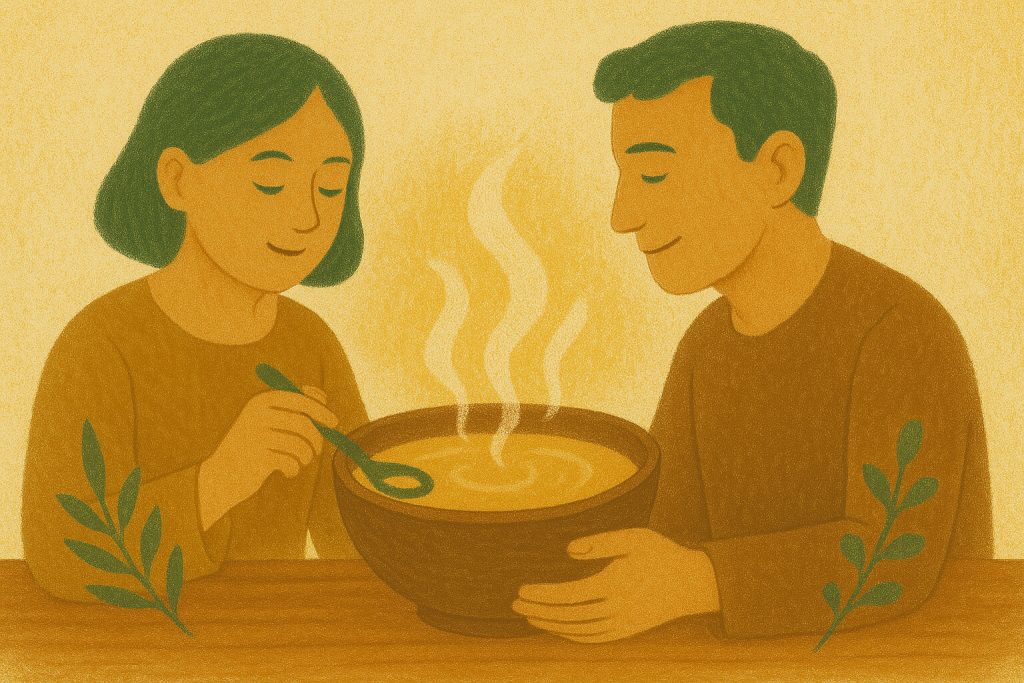
A bowl of soup unites people across generations and cultures.
It is the oldest form of hospitality — an edible gesture of care that transcends language.
Main Text
In every civilization, soup is the beginning of sharing.
In China, family dinners start with a communal pot; in Korea, stews like doenjang jjigae symbolize unity; in France, pot-au-feu once gathered entire villages. Soup embodies equality — anyone can partake, regardless of status or wealth.
Anthropologists identify soup as one of humanity’s earliest social inventions.
Archaeological evidence of ceramic vessels with bone residue shows that cooking in water transformed nomads into communities. Soup required not only fire but cooperation — a collective effort that made civilization possible.
In literature, soup often symbolizes kindness. From the Chinese idiom “施粥濟貧” (giving porridge to the poor) to the Western tale Stone Soup, the act of sharing soup teaches empathy and mutual support.
SOUPGOD carries this symbolism into the modern world through community projects and food relief initiatives. Each “One Soup, One Good Deed” campaign redefines consumption as compassion. When people share a bowl, they share humanity itself.
Conclusion
Soup is not just nourishment — it’s connection.
In giving warmth to others, we rediscover our own.
References (APA 7th)
- Mennell, S. (1996). All Manners of Food: Eating and Taste in England and France from the Middle Ages to the Present. University of Illinois Press.
- Wu, F. (2020). “The anthropology of soup: Food sharing and social ritual in East Asia.” Cultural Food Studies Journal, 9(2), 101–124.
- Hwang, J. (2023). “Soup as compassion: The social meaning of communal meals.” Asian Sociological Review, 31(1), 27–39.
 English
  香港中文
香港中文  简体中文
简体中文