
Summary
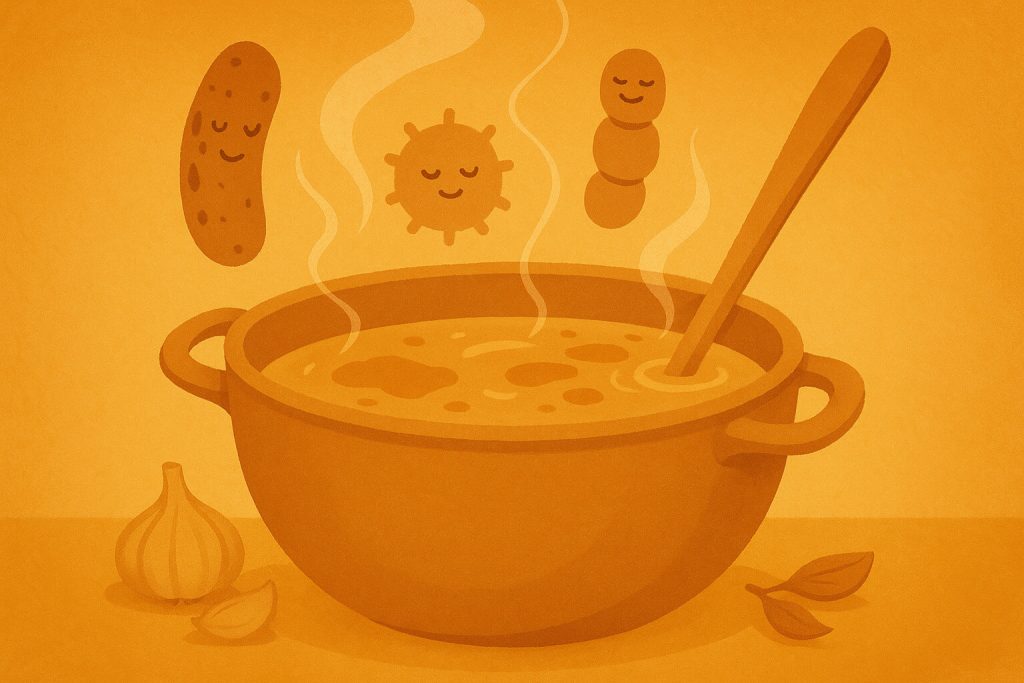
Fermentation transforms ordinary ingredients into living foods rich in enzymes, probiotics, and flavor. When incorporated into soups, fermented elements — like miso, fermented bean paste, and aged vegetables — not only deepen umami but also enhance digestion, immunity, and metabolic health.
Main Text
Fermentation is one of humanity’s oldest preservation methods — and one of its most beneficial. In traditional soups across Asia, Europe, and the Middle East, fermented ingredients have long been used to balance flavor and support gut health.
1. Miso — Japan’s Liquid Gold
Miso, made from fermented soybeans and koji mold, is the soul of miso soup. It provides amino acids, probiotics, and vitamins B and K. Studies show that miso may reduce hypertension and support gut microbiota diversity.
2. Fermented Bean Pastes — Depth from the Earth
Chinese fermented bean paste (豆瓣醬, 豆豉) adds complexity and antioxidants derived from microbial activity. When cooked in soup, its peptides and flavonoids help regulate cholesterol and inflammation.
3. Fermented Vegetables — Tangy and Alive
Korean kimchi, Chinese suancai, and European sauerkraut bring acidity, crunch, and probiotics. When added to light broths, they enhance appetite and stimulate gastric function.
4. Fermented Grains and Rice — Ancient Wisdom Reborn
Rice koji and fermented barley create enzymes that break down starches and proteins. These are used in amazake soups and herbal congee, promoting energy and better nutrient absorption.
5. Modern Microbial Cuisine — Beyond Probiotics
Today, chefs and scientists explore postbiotics — beneficial metabolites from fermented foods that remain active even after heating. Soups thus become functional meals supporting immunity and gut health.
Fermentation adds not only flavor, but philosophy — transformation through patience. In every spoonful of fermented soup lies a reminder: time creates nourishment.
Conclusion
Fermented ingredients bring depth, diversity, and vitality to soups. They connect ancient microbial craft with modern nutrition, turning every broth into a living system of wellness.
References (APA 7th)
- Lee, K., & Han, J. (2021). “Fermentation and probiotic enrichment in traditional soups.” Journal of Functional Foods, 83, 104534.
- Wang, Q., & Chen, L. (2022). “Koji-based fermentation and bioactive peptide development.” Food Microbiology & Biotechnology, 49(7), 377–390.
- Ng, A., & Park, D. (2023). “Postbiotics and thermal stability of fermented compounds in culinary contexts.” Frontiers in Food Science, 12, 985642.
 English
  香港中文
香港中文  简体中文
简体中文