
Summary
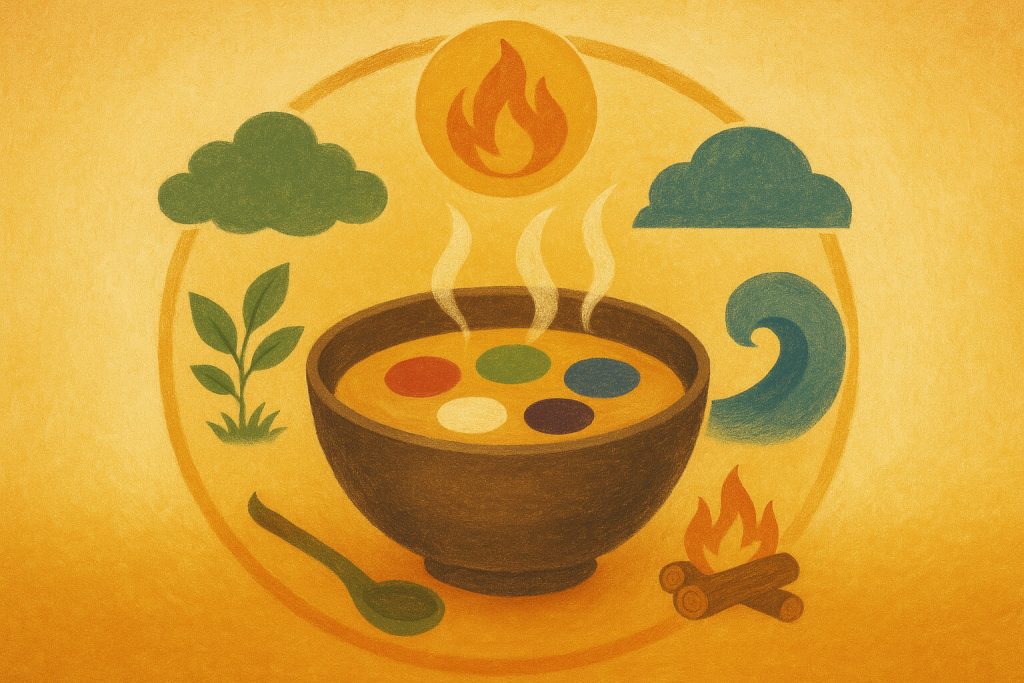
Color is energy made visible. In the culinary and healing traditions of China, colors are not just aesthetic—they symbolize the Five Elements (Wood, Fire, Earth, Metal, Water) that regulate organ systems and emotions. Soups, with their natural hues from herbs, grains, and vegetables, translate the invisible energy of nature into nourishment we can taste.
Main Text
The ancient doctrine “Five Colors enter the Five Organs” (五色入五臟) links color with physiology and emotion. When expressed through soups, these colors become a map for restoring internal balance. Each color corresponds to one of the Five Elements and exerts specific effects on the body and spirit.
Green (Wood) — Liver & Vitality
Symbolizing growth and renewal, green ingredients such as spinach, mung beans, and celery cleanse the liver and dispel stagnation. These soups calm irritability and awaken vitality.
Red (Fire) — Heart & Passion
Red foods such as goji berries, tomatoes, and red dates nourish the heart and blood, invigorating energy and emotion. A red soup warms both body and spirit.
Yellow (Earth) — Spleen & Stability
Yellow represents nourishment and grounding. Corn, pumpkin, and soybeans strengthen the spleen and promote digestion. A yellow soup embodies balance and comfort.
White (Metal) — Lungs & Clarity
White ingredients like pear, lotus seed, and tofu clear heat, moisten lungs, and enhance purity of breath. White soups symbolize calmness and reflection.
Black (Water) — Kidneys & Essence
Black sesame, black beans, and seaweed strengthen kidneys and preserve jing (vital essence). Black soups provide grounding, endurance, and deep strength.
Beyond the Five Colors, the Seven Hues Theory (七彩湯譜) expands this idea by integrating emotional resonance:Orange for optimism, blue for calm, indigo for introspection, and purple for spiritual balance. Together, they reflect both physical and emotional nourishment.
Modern nutrition echoes this wisdom: pigments such as carotenoids, anthocyanins, and chlorophyll are powerful antioxidants linked to organ protection and mood stability. Thus, eating colorfully is both aesthetic and scientific.
Conclusion
Color in soup is more than appearance—it is energy in edible form. By harmonizing the Five Colors and embracing the Seven Hues, we restore the balance between flavor, form, and feeling.
References (APA 7th)
- Wang, T., & Chen, L. (2021). “The symbolism of color in food therapy: From Five Elements to modern nutrition.” Chinese Journal of Integrative Nutrition, 15(2), 55–68.
- Li, P. (2020). “Color psychology in dietary therapy.” Asian Health Studies, 9(4), 241–258.
- Xu, H., & Zhao, W. (2022). “Phytonutrients and color-based organ protection.” Frontiers in Nutrition, 9, 812335.
 English
  香港中文
香港中文  简体中文
简体中文