Summary
Healthy aging begins with nourishment that restores balance, not excess. Soup, long valued in Chinese medicine, supports digestion, immunity, and joint health — making it an ideal food for the elderly seeking vitality and comfort.
Main Text
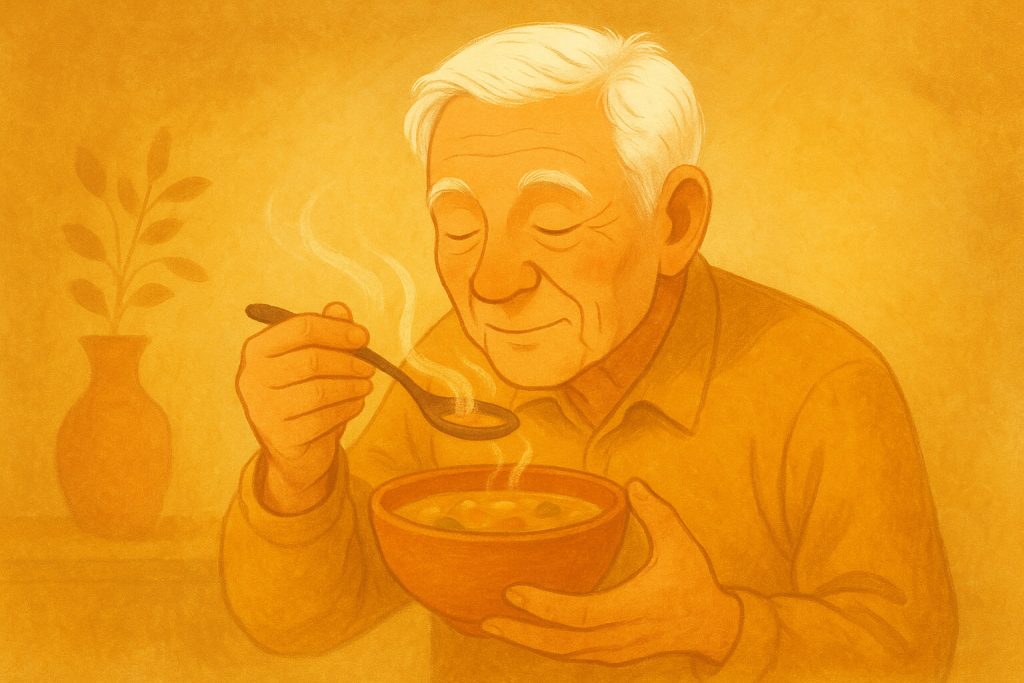
As people age, metabolism slows, appetite decreases, and digestion weakens. Soups, being warm, soft, and nutrient-dense, provide easy-to-absorb nourishment — protecting organs, strengthening the body, and soothing the spirit.
1. Supporting Digestion and Qi
In TCM, aging is linked to declining spleen and stomach qi. Light soups with yam, barley, and mushrooms enhance digestion, promote nutrient absorption, and prevent bloating.
2. Strengthening the Kidneys and Bones
The kidneys govern bones in TCM theory. Black bean, seaweed, and pork bone soups replenish calcium and phosphorus, supporting bone density and joint flexibility.
3. Protecting the Heart and Circulation
Soups with tomatoes, hawthorn, and lotus leaf support cardiovascular health by lowering lipids and improving blood flow. Avoid overly salty broths to reduce strain on the heart and kidneys.
4. Enhancing Immunity
Bone broth and herbal soups containing astragalus, goji berries, and codonopsis root boost immune resilience and energy, particularly during seasonal transitions.
5. Supporting Cognitive and Emotional Health
Fish and walnut soups are rich in omega-3 and lecithin, enhancing brain function and reducing memory decline. A warm evening soup helps improve sleep and mood stability.
6. Preventing Inflammation and Chronic Diseases
Turmeric, ginger, and garlic soups reduce systemic inflammation. Combined with vegetables and lean protein, they lower risks of diabetes, arthritis, and cardiovascular conditions.
True longevity is not achieved through excessive supplementation but through daily, mindful nourishment. Soup teaches the rhythm of moderation — warm, balanced, and restorative.
Conclusion
For the elderly, soup is more than comfort food — it is a bridge between tradition and modern wellness. Each bowl restores harmony between time, body, and spirit.
References (APA 7th)
- Huang, L., & Tang, C. (2021). “Nutritional strategies for healthy aging.” Journal of Geriatric Nutrition, 12(3), 178–195.
- Zhou, M., & Lin, H. (2022). “Traditional dietary approaches for the elderly in TCM.” Chinese Journal of Integrative Medicine, 28(1), 45–58.
- Park, S., & Kim, J. (2023). “Soup-based dietary interventions for cardiovascular and metabolic health.” Nutrition Science Review, 19(4), 210–228.
 English
  香港中文
香港中文  简体中文
简体中文