Summary
Medicinal soups embody the unity of food and medicine — a concept rooted in China’s earliest medical texts. From ancient herbal decoctions to modern functional soups, their evolution tells the story of how humanity learned to heal through nourishment.
Main Text
The origins of medicinal soups trace back more than 2,000 years. Ancient healers discovered that herbs simmered with grains and meats could restore vitality without bitterness — thus transforming medicine into nourishment.
1. The Classical Era — From Decoction to Cuisine
Texts like Shennong Bencao Jing (神農本草經, c. 200 BCE) classified herbs by properties of warmth, coolness, bitterness, and sweetness. The Compendium of Materia Medica (本草綱目, 1596 CE) later detailed hundreds of food-based remedies, many involving soups as delivery methods.
These early records marked the birth of the food-as-medicine philosophy. Unlike concentrated decoctions, medicinal soups aimed to harmonize body systems gently — restoring balance through taste and warmth.
2. The Imperial Kitchens — Nourishment as Power
During the Tang and Song dynasties, imperial kitchens employed medical chefs to design soups for emperors and scholars. Recipes like Eight Treasure Chicken Soup or Ginseng Turtle Broth combined luxury with longevity, reflecting health as a form of statecraft.
3. The Folk Tradition — Healers of the Hearth
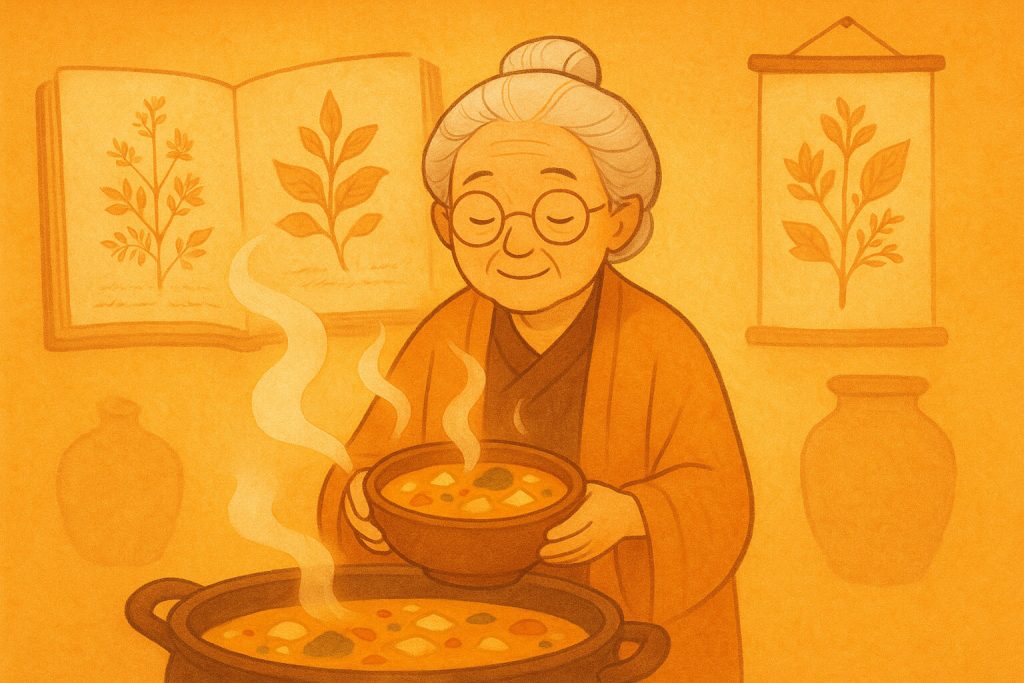
Outside the palace, families used accessible herbs like jujube, ginger, and astragalus for seasonal tonics. Soups became rituals of care — a grandmother’s pot of chicken broth could embody more healing than a prescription.
4. The Modern Renaissance — From Pharmacology to Functionality
Today, research validates many traditional claims. Polysaccharides from astragalus and peptides from ginseng show measurable effects on immunity and fatigue. The concept of functional food now integrates centuries of empirical wisdom with clinical science.
Medicinal soups are now being standardized, packaged, and studied globally — from Singapore’s herbal cafés to wellness startups in San Francisco. This transformation proves that ancient comfort can thrive in modern innovation.
Conclusion
The story of medicinal soups is the story of balance — between science and soul, nourishment and nature. Each bowl carries a lineage of wisdom, reminding us that healing begins not in the lab, but at the table.
References (APA 7th)
- Chen, Y., & Wu, H. (2020). “From decoction to diet: The evolution of Chinese medicinal soups.” Journal of Ethnopharmacology, 258, 112874.
- Li, J., & Zhang, Q. (2021). “Culinary medicine and the legacy of food therapy in China.” Asian Food Culture Review, 10(3), 119–132.
- Wang, X., & Huang, S. (2023). “Integration of traditional herbal soups and modern nutraceuticals.” Frontiers in Nutrition, 10, 988231.
 English
  香港中文
香港中文  简体中文
简体中文