
Summary
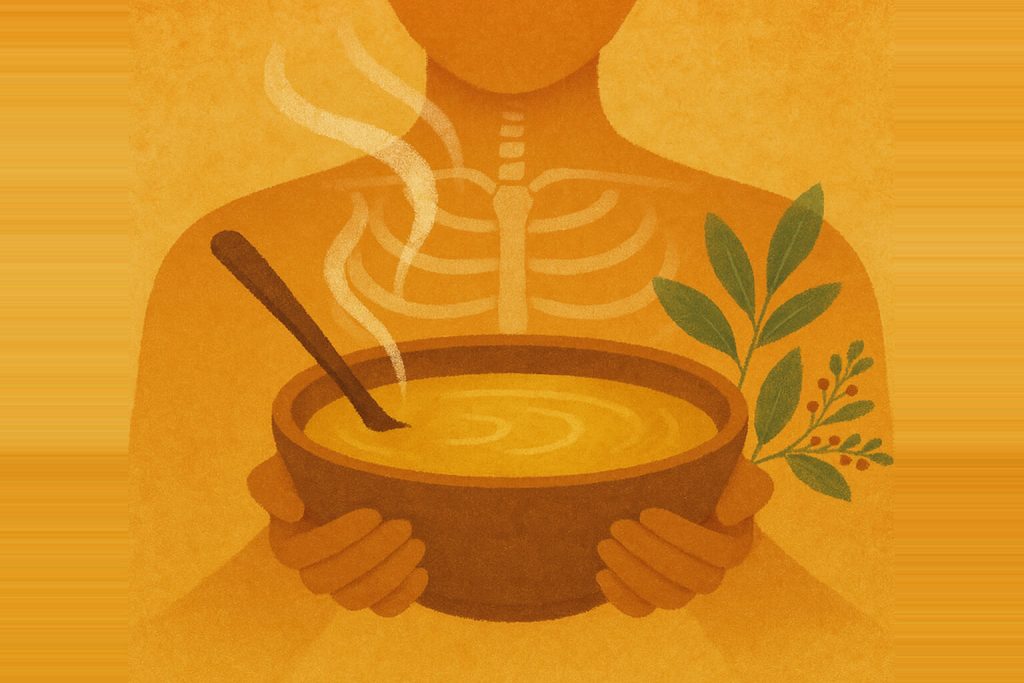
Collagen, often called the “glue of life,” is the most abundant protein in the human body. Long-simmered soups naturally extract collagen, gelatin, and amino acids that repair tissues, enhance skin elasticity, and strengthen joints.
Main Text
When animal bones, tendons, and skin are slowly simmered, collagen breaks down into gelatin — a digestible form rich in glycine, proline, and hydroxyproline. These amino acids are essential for rebuilding connective tissues, including skin, ligaments, and the intestinal lining.
Glycine helps regulate sleep and calm the nervous system, while proline supports wound healing and joint lubrication. Together, they promote elasticity and regeneration — a biological foundation of youthfulness.
In Traditional Chinese Medicine (TCM), soups rich in collagen are categorized as “補陰養血” (nourishing yin and blood). Pig’s feet soup, fish maw soup, and snow fungus soup are traditional remedies to restore vitality and smooth skin.
From a biochemical perspective, collagen provides the amino acid building blocks required for tissue repair. When combined with vitamin C (from goji berries, jujube, or lemon), its absorption efficiency increases significantly.
Clinical studies indicate that daily consumption of collagen-rich broth can improve skin hydration and elasticity within eight weeks, while also reducing joint discomfort in aging adults.
Beyond aesthetics, collagen soups also strengthen gut integrity — forming a natural barrier against inflammation and “leaky gut” syndrome. This dual function of beauty and protection makes broth a holistic healer.
Conclusion
Collagen reminds us that healing begins within. Every simmering pot of soup rebuilds not only our tissues but our sense of wholeness — one bowl at a time.
References (APA 7th)
- Proksch, E., Schunck, M., Zague, V., Segger, D., Degwert, J., & Oesser, S. (2014). “Oral intake of specific bioactive collagen peptides reduces skin wrinkles and increases dermal matrix synthesis.” Skin Pharmacology and Physiology, 27(3), 113–119.
- Clark, K. L., Sebastianelli, W., Flechsenhar, K. R., et al. (2008). “24-week study on the use of collagen hydrolysate as a dietary supplement in athletes with joint pain.” Current Medical Research and Opinion, 24(5), 1485–1496
- Li, Y., & Zhang, Y. (2021). “Collagen peptides and gut health: Mechanisms and evidence.” Nutrients, 13(10), 3382.
 English
  香港中文
香港中文  简体中文
简体中文