
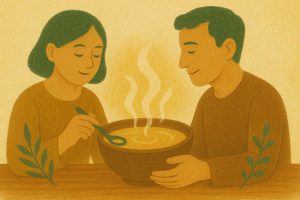

Soup as Connection — The Cultural Meaning of Sharing
A bowl of soup unites people across generations and cultures.
It is the oldest form of hospitality — an edible gesture of care that transcends language.
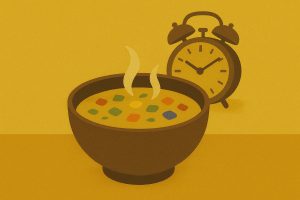
Soup and Time — The Philosophy of Slow Nourishment
In a world obsessed with speed, soup teaches patience.
The act of simmering — allowing ingredients to merge over time — is both a culinary and spiritual exercise. It embodies the Taoist principle of wu wei (effortless action) and mindfulness through nourishment.
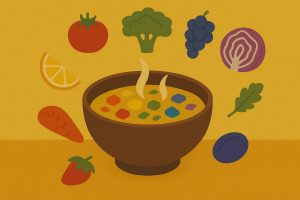
The Color of Nutrition — The Seven Colors of Healing Soup
Color is more than visual appeal — it’s a language of nutrients.
Each natural color in food reflects a unique set of phytochemicals that influence human health. SOUPGOD’s “Seven-Color Soup” concept translates this science into harmony: every hue contributes to balance, protection, and vitality.
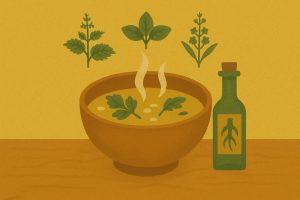
Herbal Harmony — The Science of Healing Broths
For centuries, herbal soups have bridged the worlds of medicine and culinary art.
The modern lens of phytochemistry confirms that many herbs used in traditional broths contain bioactive compounds that enhance immunity, circulation, and longevity.
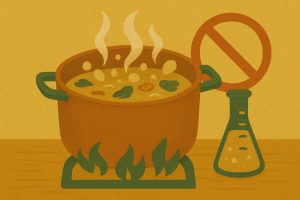
The Science of Soup Boiling — Why Soup Should Never Be Boiled Hard
The secret to a perfect soup lies not in speed but in patience. Boiling soup too violently destroys its structure, flavor, and nutritional integrity. Gentle simmering—where the surface softly trembles—is the key to unlocking the deep essence of ingredients without breaking their molecular harmony.
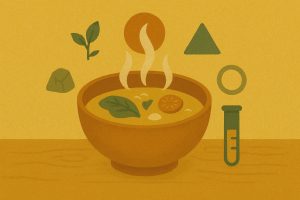
Balance in a Bowl — The Five Elements and Human Harmony
True nourishment is achieved when the body’s internal rhythm mirrors nature’s cycle.
The Five-Element theory (Wood, Fire, Earth, Metal, Water) offers a framework for this balance — a philosophy that connects flavor, organs, and seasons into a complete system of well-being. Modern nutrition echoes this wisdom through the concept of homeostasis and nutrient synergy.
 English
  香港中文
香港中文  简体中文
简体中文