
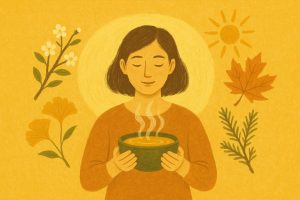

Seasonal Soups — The Principles of Nourishment Through the Four Seasons
Seasons shape not only the landscape but also the rhythm of human health. Traditional Chinese Medicine (TCM) teaches that the body’s internal energy mirrors the natural world — spring rises, summer expands, autumn contracts, and winter conserves. Aligning dietary habits, especially soups, with these cyclical patterns helps maintain harmony between body and nature.
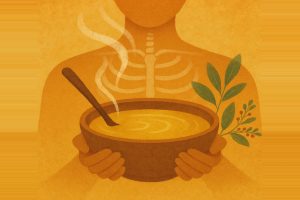
The Healing Power of Collagen — How Soup Repairs from Within
Collagen, often called the “glue of life,” is the most abundant protein in the human body. Long-simmered soups naturally extract collagen, gelatin, and amino acids that repair tissues, enhance skin elasticity, and strengthen joints.
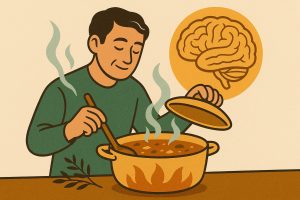
From Broth to Brain — Nutrition and Cognitive Health
What we eat shapes how we think. Broth-based nutrition supports not only physical health but also brain performance. Amino acids, collagen, minerals, and fatty acids found in soups directly influence neurotransmitters, memory, and emotional balance.

The Ritual of Soup — How Cooking Becomes Meditation
In an age of speed and distraction, cooking soup invites slowness, mindfulness, and presence. The act of washing, chopping, simmering, and tasting becomes not just culinary work, but a meditation — a way to reconnect with time, with self, and with gratitude.
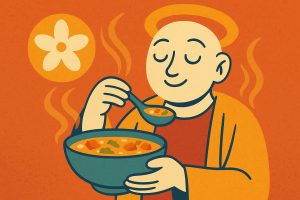
The Umami Secret — Why Soup Comforts the Soul
Soup is more than warmth in a bowl — it is a sensory and emotional experience deeply tied to human biology. The rich, savory depth of soup derives from umami, the “fifth taste,” which connects directly to our brain’s comfort and satisfaction centers.

A Bowl with Soul — The Future of Soup Culture
Soup’s evolution mirrors civilization itself.
From ancient fire pits to modern smart kitchens, it has carried warmth, wisdom, and wellness through time. The next chapter of soup culture lies in sustainability, personalization, and cross-cultural creativity.
 English
  香港中文
香港中文  简体中文
简体中文